
Thinking About Learning to Skate? Here’s Where to Start
For many families, ice skating is a fun way to try something new, stay active and discover a new hobby.
Whether your child has never stepped onto the ice or has enjoyed a few public skating sessions, learning to skate can open the door to a fun and rewarding new activity.
If you’ve never enrolled a child in skating lessons before, you may have a few questions. What age should they start? What should they wear? Do they need their own skates? And what happens during that first lesson?
Here’s what parents should know before getting started.
When Is the Right Time to Start Learning to Skate?
While everyone is different when they decide to learn, we do start offering classes starting at age 4, though youth, teens and adults!
Skaters with no previous formal skating experience should start in FMC’s Step 1: Learn to Skate program which introduces the basics in a fun group environment. Step 1 classes are offered into two age groups: Tot for 4-6 years and Youth for 6-15 years.
And skating isn’t just for kids! FMC also offers Teen/Adult Learn to Skate classes for participants ages 16 and older. Whether you’re learning for the first time or looking to improve your skills, there’s an opportunity to build confidence on the ice.
What Should My Child Wear for Their First Lesson?
You don’t need a lot of specialized equipment to get started, but dressing appropriately can make a big difference in your child’s comfort.
FMC recommends the following for beginner skaters:
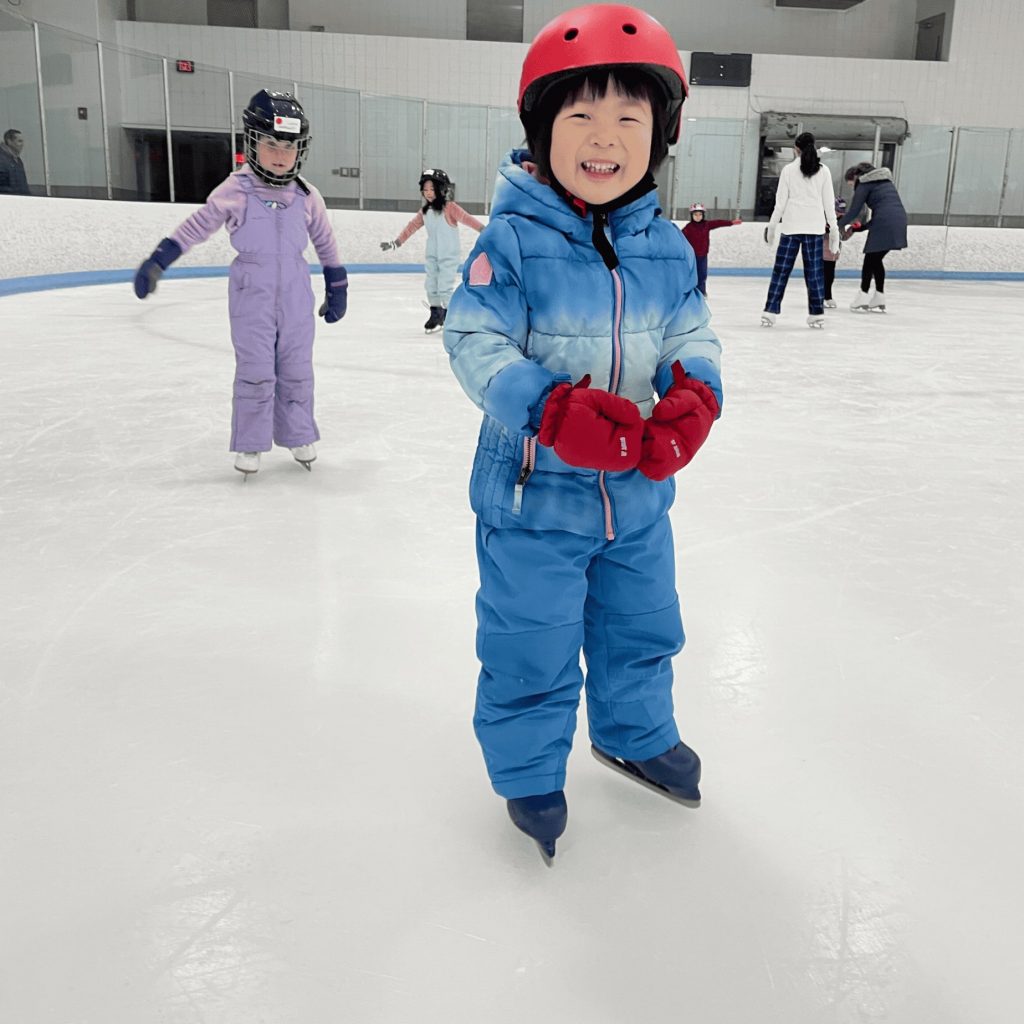
- Warm, comfortable layers: Ice arenas are cold, so dress in layers that allow for easy movement.
- Long sleeves and pants: These provide warmth and some protection when learning to skate.
- Gloves or mittens: Keeping hands warm is important, especially for young beginners.
- A properly fitted helmet: FMC requires participants in its beginner Learn to Skate programs to provide their own helmet. A bike helmet or HECC-approved helmet is acceptable.
- Waterproof clothing for younger skaters: Beginners are likely to spend some time on the ice, so waterproof outer layers can help keep them comfortable.
What about skates? There’s no need to purchase a pair before the first lesson. FMC includes skate rentals in the class fee, with rentals available on a first-come, first-served basis. Families are also welcome to bring their own skates, although double-blade skates are not permitted.
What Happens During the First Skating Lesson?
It’s completely normal for beginners to feel a little nervous before stepping onto the ice for the first time.
FMC’s Learn to Skate programs introduce skills in a logical, progressive way, allowing participants to build their abilities as they become more comfortable.
Beginners start with the fundamentals, including learning how to fall safely, get back up and take their first steps on the ice. As they progress, they’ll work on balance, coordination, gliding, proper pushing techniques and other basic skating skills.
Lessons are designed around different skill levels, so students can develop at their own pace. Every new skill mastered is another reason to feel proud!
A helpful tip for parents: Plan to arrive 15–20 minutes before your scheduled lesson. This gives your child time to get their skates on, get comfortable and be ready when class begins.
Why Keep Practicing Between Lessons?
Just like learning any new skill, practice makes progress!
Public skating sessions are a great opportunity for children to work on what they’ve learned during lessons while enjoying additional time on the ice with family and friends.
Whether it’s practicing balance, working on gliding or simply becoming more comfortable moving around the rink, extra time on the ice can help reinforce new skills and build confidence.
FMC offers public skating opportunities at locations throughout Massachusetts. Check your local rink’s schedule for upcoming sessions.
What Are the Benefits of Learning to Skate?
Ice skating offers more than just a fun way to spend time on the ice. It’s also an opportunity for children to develop important physical and personal skills.
Through skating, children can work on balance, coordination, strength and overall fitness. Lessons also encourage perseverance, patience and confidence as students practice and work toward mastering new skills.
And perhaps one of the best benefits? The friendships and memories that come from participating in an activity they enjoy.
Where Can Skating Take Them Next?
Learning the fundamentals of skating can open the door to other opportunities on the ice.
For children interested in hockey or figure skating, developing a strong skating foundation is an important first step. As their skills and confidence grow, they can explore additional programs and activities that match their interests.
Even if they never pursue a competitive sport, learning to skate gives them a skill they can enjoy with family and friends for years to come.
Ready to Take the First Step?
Getting started doesn’t have to be complicated. With the right instruction, a little patience and plenty of encouragement, that first step onto the ice can turn into a lifelong love of skating.
FMC Ice Sports offers Learn to Skate programs for children, teens and adults at locations throughout Massachusetts. From first-time beginners to skaters ready to develop their skills, there’s an opportunity to discover the enjoyment of being on the ice.
Ready to get started? Explore Learn to Skate programs and find a session at an FMC Ice Sports rink near you!